
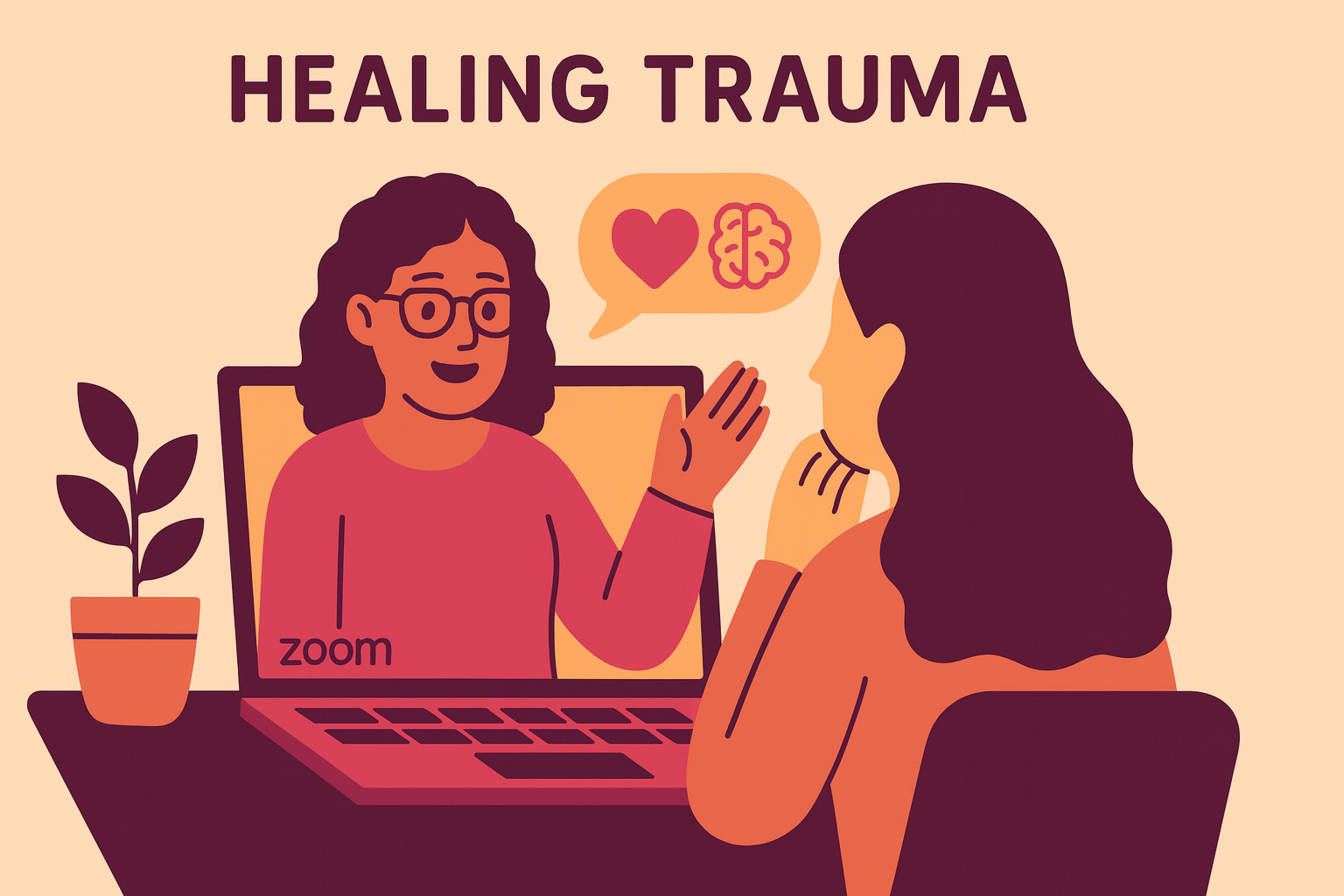
Trauma-Informed Therapy Techniques: A Pathway to Healing
When we think of healing trauma, many people envision talking it out in a traditional therapy setting. While this can be helpful, trauma doesn’t just live in our thoughts—it resides in our nervous system, body, and beliefs about the world. That’s where trauma-informed therapy techniques come in.
Unlike conventional therapy models that may unintentionally re-trigger or overlook the needs of trauma survivors, trauma-informed approaches prioritize safety, compassion, and empowerment. They’re designed to meet you where you are, honoring your pace and your story.
In this post, we’ll explore what it means for therapy to be “trauma-informed,” why it matters, and highlight evidence-based trauma-informed therapy techniques that are helping people around the world reclaim their lives.
What Is Trauma-Informed Therapy?
Trauma-informed therapy is a framework that acknowledges the widespread impact of trauma and integrates this awareness into every aspect of the therapeutic process. It’s not a specific technique, but a philosophy that shapes how therapy is offered.
A trauma-informed approach assumes:
Many people have experienced trauma (even if they don’t identify it as such)
Trauma affects the nervous system, emotions, memory, and relationships
Healing requires safety, trust, choice, and collaboration
In trauma-informed care, the therapist is not a fixer—they’re a compassionate guide, helping you build resilience and reconnect with your inner sense of safety and strength.
Why Trauma-Informed Care Matters
Traditional therapy approaches may ask people to revisit painful memories too soon, dismiss body-based symptoms, or treat surface-level issues without acknowledging the trauma beneath them.
Trauma-informed therapy creates an environment that:
Prevents re-traumatization
Empowers the client to set the pace
Addresses the root causes of emotional and behavioral challenges
Prioritizes regulation over confrontation
This approach is especially vital for people healing from:
Complex PTSD or developmental trauma
Childhood neglect or abuse
Sexual assault or domestic violence
Medical trauma, racial trauma, or grief
When therapy is trauma-informed, it becomes less about “fixing” and more about restoring wholeness.
Core Principles of Trauma-Informed Therapy
Before diving into techniques, it’s helpful to understand the foundational values that shape trauma-informed care:
Safety: Physical and emotional safety are prioritized at all times.
Trustworthiness: Clear boundaries and consistent communication build trust.
Choice: Clients are given options and control over their healing journey.
Collaboration: Healing is a partnership, not a power dynamic.
Empowerment: Strengths are highlighted and autonomy is encouraged.
Cultural, Historical, and Gender Awareness: Therapy considers the client’s full context.
Top Trauma-Informed Therapy Techniques
Let’s explore the most effective trauma-informed therapy techniques that support deep, lasting healing.
1. Somatic Experiencing (SE)
What it is: Developed by Dr. Peter Levine, Somatic Experiencing focuses on releasing trauma stored in the body. Rather than reliving the traumatic event, SE helps you notice physical sensations linked to trauma and gently discharge them.
Benefits:
Reduces chronic tension and hypervigilance
Restores nervous system balance
Builds body awareness and emotional resilience
A session might involve:
Tuning into subtle bodily sensations, tracking tension or release, and supporting the body’s natural rhythm of regulation.
Healing wisdom: Your body remembers, but it also knows how to let go—if given the right space.
2. Eye Movement Desensitization and Reprocessing (EMDR)
What it is: EMDR is a structured therapy that helps reprocess traumatic memories using bilateral stimulation, such as eye movements, tapping, or sounds.
Benefits:
Reduces emotional intensity of traumatic memories
Builds new, adaptive beliefs
Effective for PTSD, grief, and anxiety
A session might involve:
Bringing a distressing memory to mind while following a back-and-forth visual cue, allowing the brain to reprocess the event in a safe context.
Client insight: “I still remember what happened, but it no longer controls me.”
3. Internal Family Systems (IFS)
What it is: IFS therapy sees the mind as made up of different “parts” (e.g., Inner Child, Protector, Critic) and helps heal wounded parts by connecting with the compassionate “Self” within.
Benefits:
Heals inner fragmentation
Reduces shame and self-sabotage
Builds self-leadership and inner harmony
A session might involve:
Identifying a part that’s feeling triggered, listening to its concerns, and gently exploring its role in your system.
Spiritual note: IFS mirrors many ancient healing philosophies: wholeness already exists within—it just needs to be remembered.
4. Polyvagal-Informed Therapy
What it is: Based on Dr. Stephen Porges’ Polyvagal Theory, this approach focuses on the autonomic nervous system and how our body responds to perceived safety or threat.
Benefits:
Teaches self-regulation tools
Helps decode “shutdown,” anxiety, or fawning behaviors
Normalizes physiological trauma responses
Practices include:
Breathwork
Vagus nerve toning (humming, gargling, cold exposure)
Co-regulation with safe people or animals
Key takeaway: Regulation is not a luxury—it’s the foundation of healing.
5. Narrative and Expressive Therapies
What they are: Trauma-informed expressive therapies include art therapy, music therapy, journaling, and storytelling. These non-verbal methods allow people to express what words cannot.
Benefits:
Externalizes pain in a creative, contained way
Helps reshape identity beyond trauma
Supports emotional processing without retraumatization
Examples include:
Writing letters to your younger self
Painting your healing journey
Using metaphors to reframe your story
Affirmation: “I get to rewrite my narrative on my own terms.”
How to Choose the Right Trauma-Informed Approach
Not every technique works for every person—and that’s okay. Healing is deeply personal.
Here’s how to choose:
Start with safety: Does the therapist make you feel seen, respected, and safe?
Listen to your body: After sessions, do you feel calmer, more connected, or more empowered?
Be patient: It may take a few tries to find the right method or practitioner.
Consider layering: Many people benefit from combining talk therapy with somatic or creative work.
Healing isn’t one-size-fits-all. The right approach is the one that meets you where you are—with compassion and care.
A Spiritual Perspective on Trauma-Informed Healing
While therapy works on the psychological and physiological levels, many survivors feel drawn to soul-based healing as well. Trauma often disconnects us from our intuition, purpose, and sense of belonging.
Integrating spiritual practices—such as meditation, ritual, mindfulness, or connection to nature—can support and complement trauma-informed techniques.
Try combining:
- IFS + Inner Child Meditation
- Somatic Therapy + Breathwork
- Expressive Arts + Journaling with Intention
- Polyvagal Work + Spiritual Grounding Rituals
Healing becomes not just recovery—but remembering who you truly are beyond the trauma.
You Are the Expert of Your Own Healing
Therapists, tools, and techniques are powerful allies—but you are the constant in your healing journey.
Every time you set a boundary, ask for support, or choose rest over self-punishment, you’re practicing trauma-informed self-care.
Every breath, every tear, every pause for reflection is a form of medicine.
You don’t have to “get over” what happened.
But you can learn to carry it differently.
With grace. With power. With choice.
Ready to Begin? Here's Your First Step
- Take 3 slow breaths.
- Ask yourself: What kind of support feels most nourishing right now?
- Know that healing is possible, even if you can’t yet see how.
- You are not broken—you are healing. And that is a sacred journey.